Solar power plants are popping out at fast pace and this is great news. Moving towards a cleaner energy mix is a shared and recognised purpose and solar energy will be instrumental to it. Solar energy is also peculiar as we manage to convert burning hydrogen from the sun into electrons feeding our electrical system and daily activities.
Unlike the burning of hydrocarbons or the release of stored energy from lithium batteries, we do not exactly control the amount of exposure our solar centrals will get. Nor do we have piloting systems to control it. This leaves us to collect an ‘unsupervised’ amount of solar energy into our electrical grid.
Power output from a solar power plant throughout the day
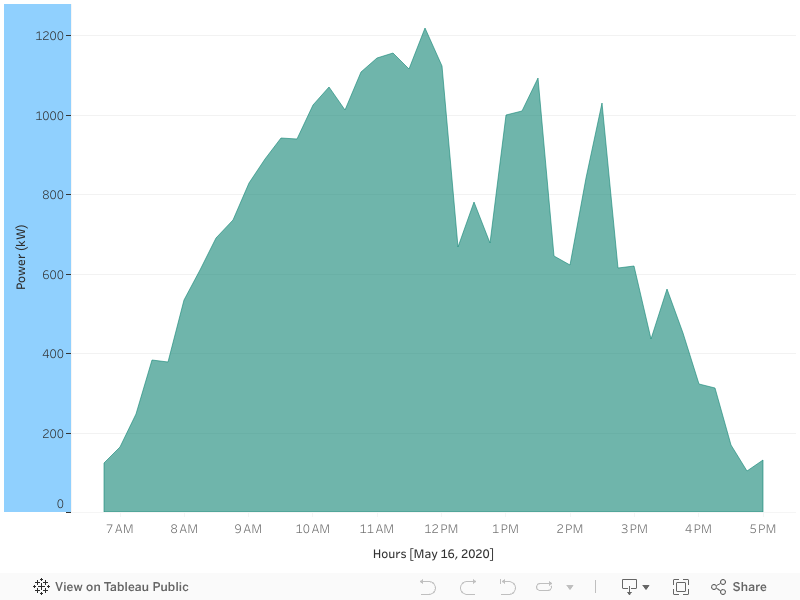
Power output of a 1 MWp solar power plant based in Paris, Wematics
This does not exactly look like the steady energy output our electrical grid was initially built for. And it has been okay for the first stages of solar power development and frankly never truly significantly challenged our energy system. But this is today what is holding us back. Indeed, factoring the sharp increase of solar power, the incompressibility of solar energy and its intermittent nature, solar power is sometimes playing the electrical grid like a banjo.
Recent years increase of solar power capacity in Belgium
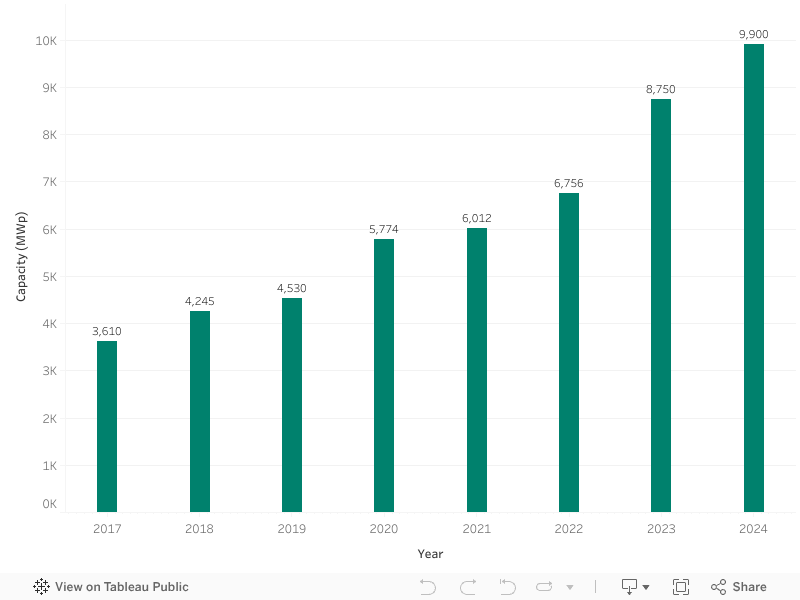
Photovoltaic Barometer, EuObserv’ER
The electrical grid is being managed and balanced by balance responsible parties (BRPs) at every endpoints. They are well known utilities across the country contracting energy contracts with energy consumers.
Amongst other responsibilities, they need to predict and enforce the amount of energy they will inject and offtake. And this is where the volatility of solar power hits hard. Errors in predicting energy volumes (injections or offtakes) can be costly. It is priced at the imbalance price, a penalty enforced by the grid to the BRPs at every quarterly mismatches.
Quarterly imbalance price values through time
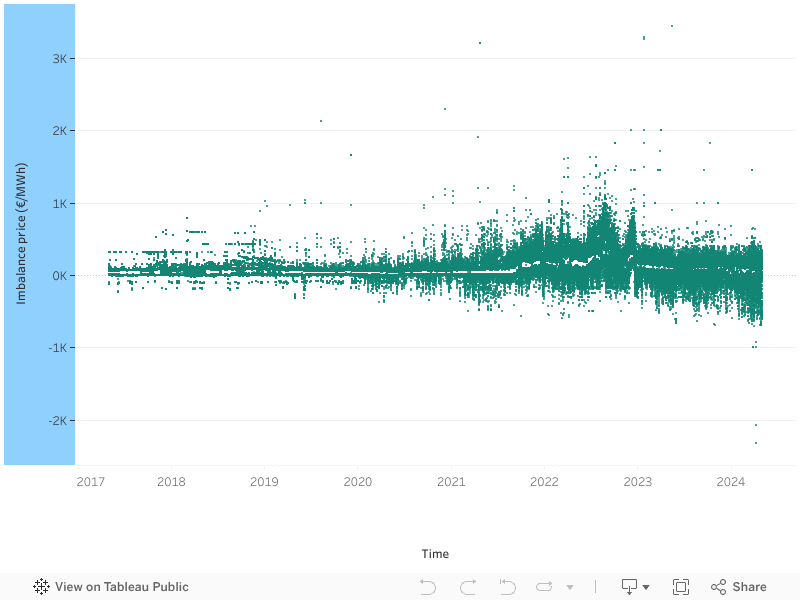
Elia
Imbalance price expresses the amount of imbalance on the electrical grid. The reason why it increased sharply in the last years is because the increasing portion of renewable energy in the energy mix is unbalancing the grid more and more. It is also why BRP are becoming reluctant to include more solar power plants in their assets as they understandably want to limit the increasing amount of imbalance fees they pay at the end of the month.
Another key indicator is the (day-ahead) spot price, which is basically the remuneration solar energy producers are being paid for injections. And there again, it tends to drop as solar incompressibility leads to lower levels and more period where spot goes below 0.
Spot values distributions for last years
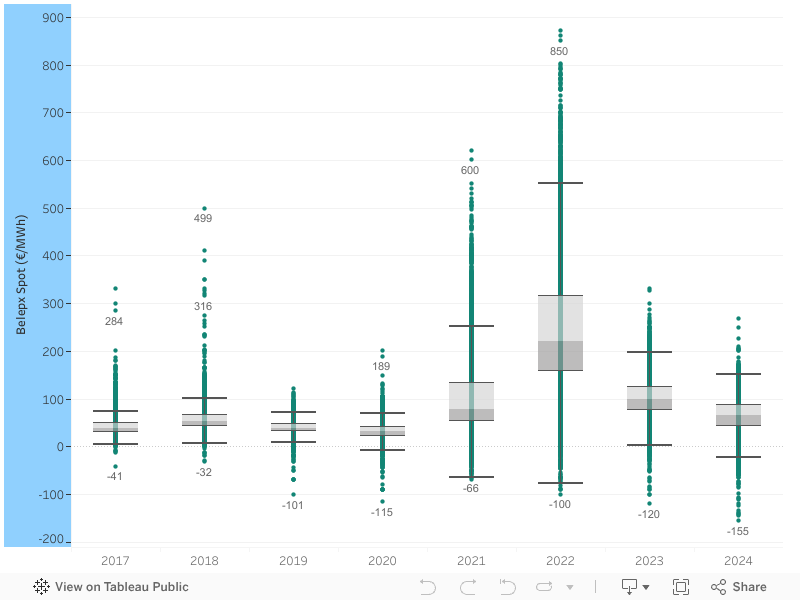
Elexys
So here we are.
On the one hand, it is clear we need to increase our solar capacity in order to make it to our energy transition.
On the other hand, we stand in front of BRPs reluctant to add additional solar capacity in their portfolio fearing soaring imbalance penalties and private developers growing weary at the level of remuneration they get for their injections.