Solar power, once overlooked as a source of grid flexibility, is increasingly joining the effort. And rightfully so, as Belgian solar capacity scale up is not likely to happen without it. We extensively quantified solar flexibility’s impact on solar revenues. Let’s now have a look at how much flexibility it can actually delivers.
First, a word of context. Belgium currently displays 10,1GW solar capacity and intends to reach 14,5GW by 2030 to reach our Green Deal targets. According to Elia, this will require the system to provide the grid with 1.860MW additional downward flexible capacity. This flexibility being intended to help the grid balance bigger capacity of intermittent solar power.
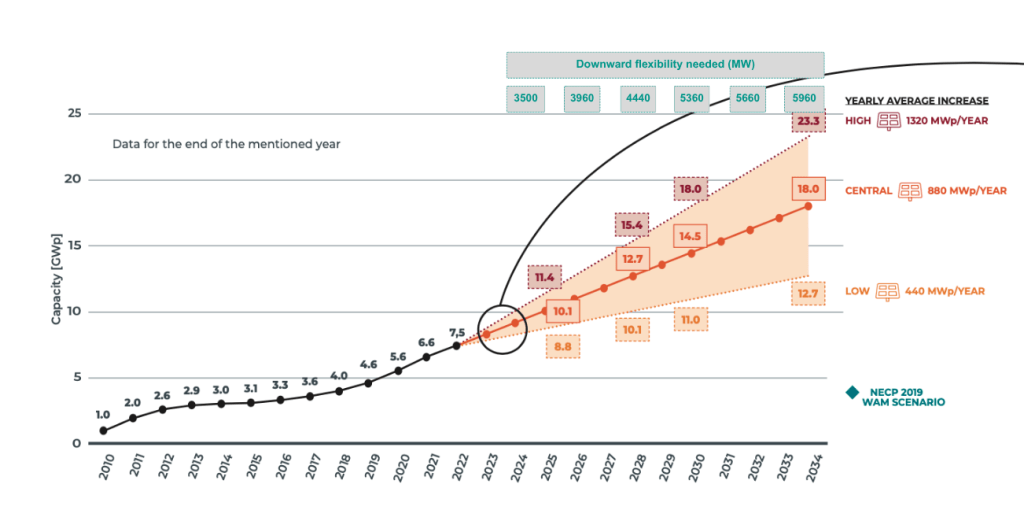
Source : Elia
1MWp flexible solar capacity provides the grid with 0,32MW additional downward flexibility
A 1MWp solar power plant produces on average 950MWh a year. Applying smart solar injections on a 1MWp solar power plant decreases yearly injected volume by 237,5 MWh. When computing downward capacity offered to the grid, we usually consider how much it decreases injected volume at times of flexibility needs. We can assume a yearly amount of 750 peak hours of grid overload from solar incompressibility. Reacting to its downward requests during 237,5 of them results in :
Provided downward capacity = 237,5MWh / 750h = 0.32MW
We can rightfully aim to deploy flexible solar injection technologies on 2GW of Belgian solar capacity by 2030, which would provide the grid with additional 640 downward flexible capacity, covering a third of total amount required by then. It therefore complements other sources of flexibility, including battery energy storage system and the shifting of industrial processes, by offering a low upfront investment solution to mid-sized solar assets across the country.
Interestingly it also brings back flexibility revenues to the solar asset, generating and injecting power into the system.
Increasing grid flexibility is essential to reduce carbon emissions and benefits the whole ecosystem.
Today, revenues and flexibility are the main roadblocks undermining further acceleration of Belgian solar capacity. Making solar power plants flexible enables the grid to absorb additional solar capacity without adding further instability to the grid. It also increases solar revenues by capturing flexibility revenues at the solar power plant level.
Making solar power flexible is therefore essential to enable further buildout of Belgian solar capacity and shift power peaks from fossil fuels to renewable power generation.
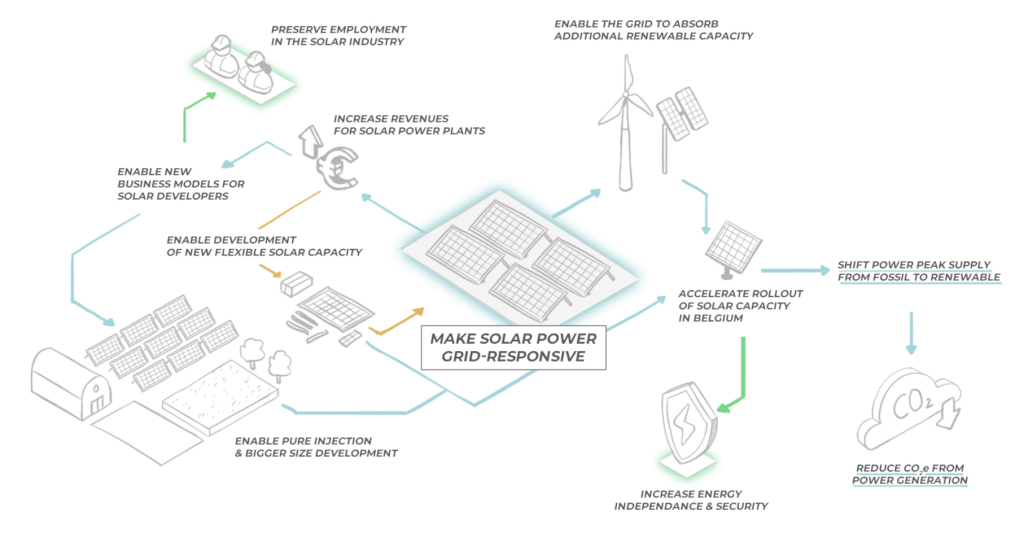
Source: Epon