When managing solar injections with direct imbalance exposure, you mainly need to deliver on 2 fronts. First, you need to tell the grid volumes you intend to inject. This is done each day, for each quarter of the next day. These are called nominations. Then, every quarterly discrepancy between nominations and actual injections will be priced at the imbalance price.
Discrepancies increasing grid imbalance generate penalties, but discrepancies helping balancing the grid generate revenues. Smart injection equipments are design to give the power plant real-time control of its injection volumes, piloted by cloud-hosted intelligence curating optimal nomination/injection strategy for each quarter.
A smart solar power plant with direct imbalance exposure delivers grid-balancing patterns, increasing both revenues and supply flexibility. Let’s go through a few of them !
1. Enjoy daylong high day-ahead prices
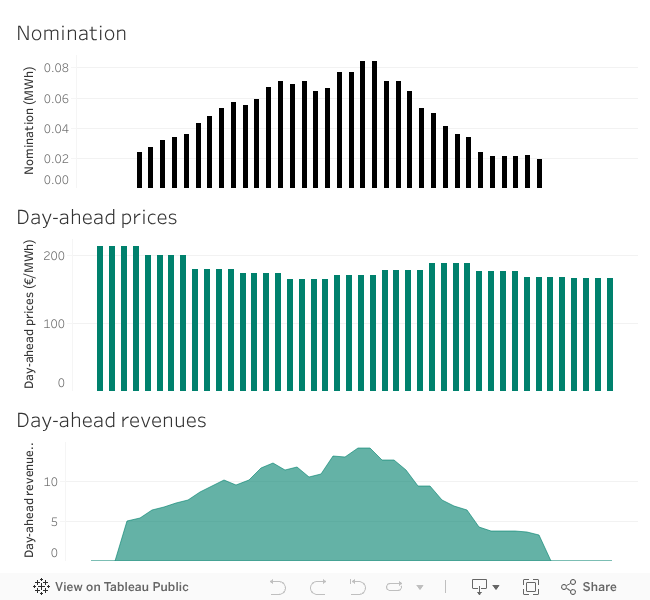
The first step is to nominate volumes for the next day on the day-ahead market. Nomination values have to be values we are confident to properly deliver as we are directly exposed to imbalance prices.
On January 22nd, 2025, for example, the plant nominated full volumes throughout the day and kept injection enjoying high day-ahead prices.
5MWp power plant with smart control of solar injection based in Belgium
2. Tails injections and upward volumes
It is more and more often the case that morning and evening prices are high while midday prices drop or even go negative. In this case, the power plant might decide to submit 0 volume nominations for midday hours and only collect day-ahead revenues in mornings and evenings.
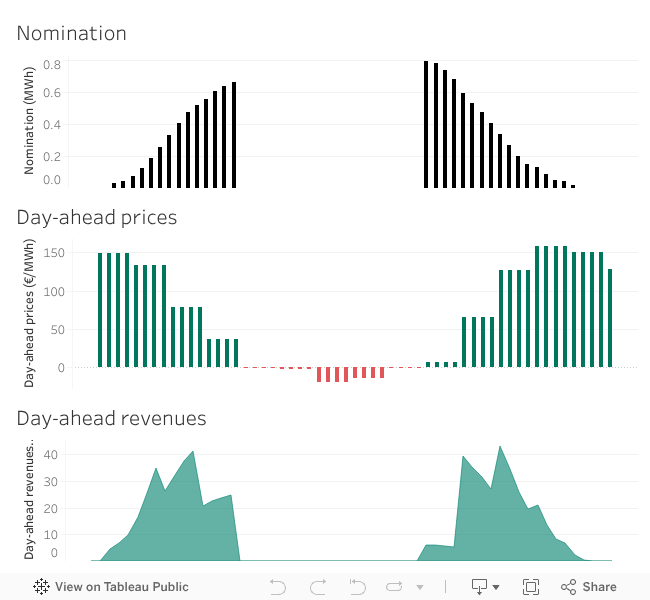
5MWp power plant with smart control of solar injection based in Belgium
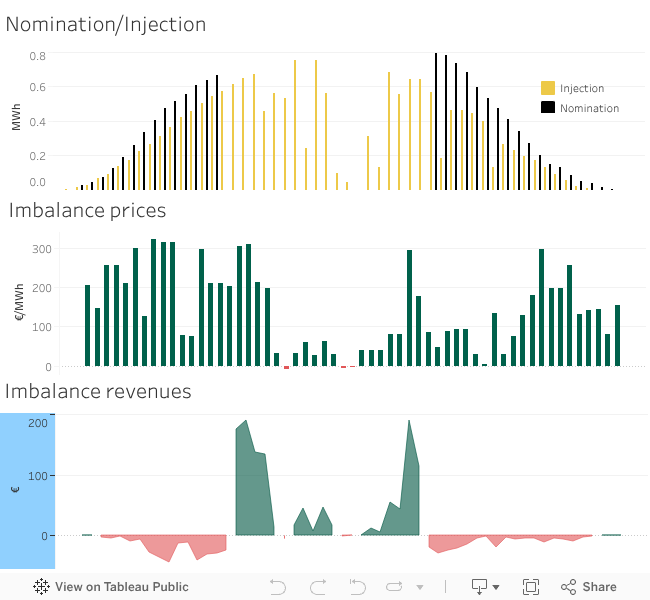
Then, as injections are directly exposed to imbalance prices, the solar power plant can still deliver upward volumes should the grid require upward balancing, as did this power plant on April 3rd, 2025.
5MWp power plant with smart control of solar injection based in Belgium
The power plant nominated volumes for morning and evening hours. It then allocated its production to answer upward imbalance requests. This often happens when midday prices are low or negative and forecasts about energy supply/consumption have low confidence level. The power plant then estimates balancing the grid will reward higher value during this period.
Let’s also notice losses occurring on the imbalance price market, resulting from lower injection volumes than the ones that were nominated.
3. Tails injections and downward volumes
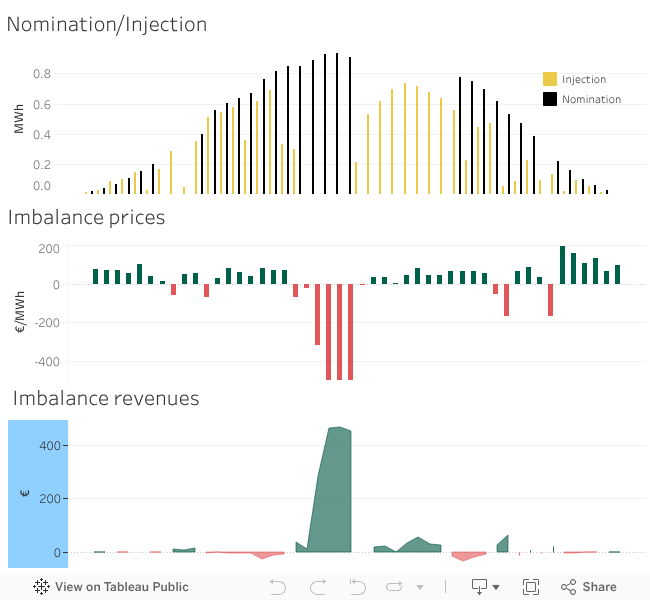
Smart injections can also nominate volumes throughout the day and then offer the grid downward volume on the imbalance price. This happens when daylong volumes were nominated but that the grid imbalance become so negative it creates high downward balancing reward. The power plant will then benefit both from day-ahead revenues and imbalance revenues during these periods.
5MWp power plant with smart control of solar injection based in Belgium
On March 2nd, 2025 for example, the power plant decided to curtail production even though it had nominated volumes between 11am and 1pm as imbalance price got very negative. Curtailed injections were valued up to 500€/MWh during that period.